A gearbox that jerks, slips or hesitates is worrying, mostly because people fear the cost of a new one. The good news is that many shifting problems come from fluid, sensors, software or a single valve, and can be fixed without replacing the gearbox. The key is diagnosing early, before a small fault damages the rest.
Common symptoms
- Harsh or jerky shifts, especially between first and second or when slowing down
- Slipping: the engine revs rise but the car doesn't accelerate
- Delay when selecting Drive or Reverse
- Judder when pulling away, common on dual-clutch (DSG, S tronic, PDK) gearboxes
- Limp mode: the car stays in one gear with a gearbox warning
- Whining, clunking or a burning smell
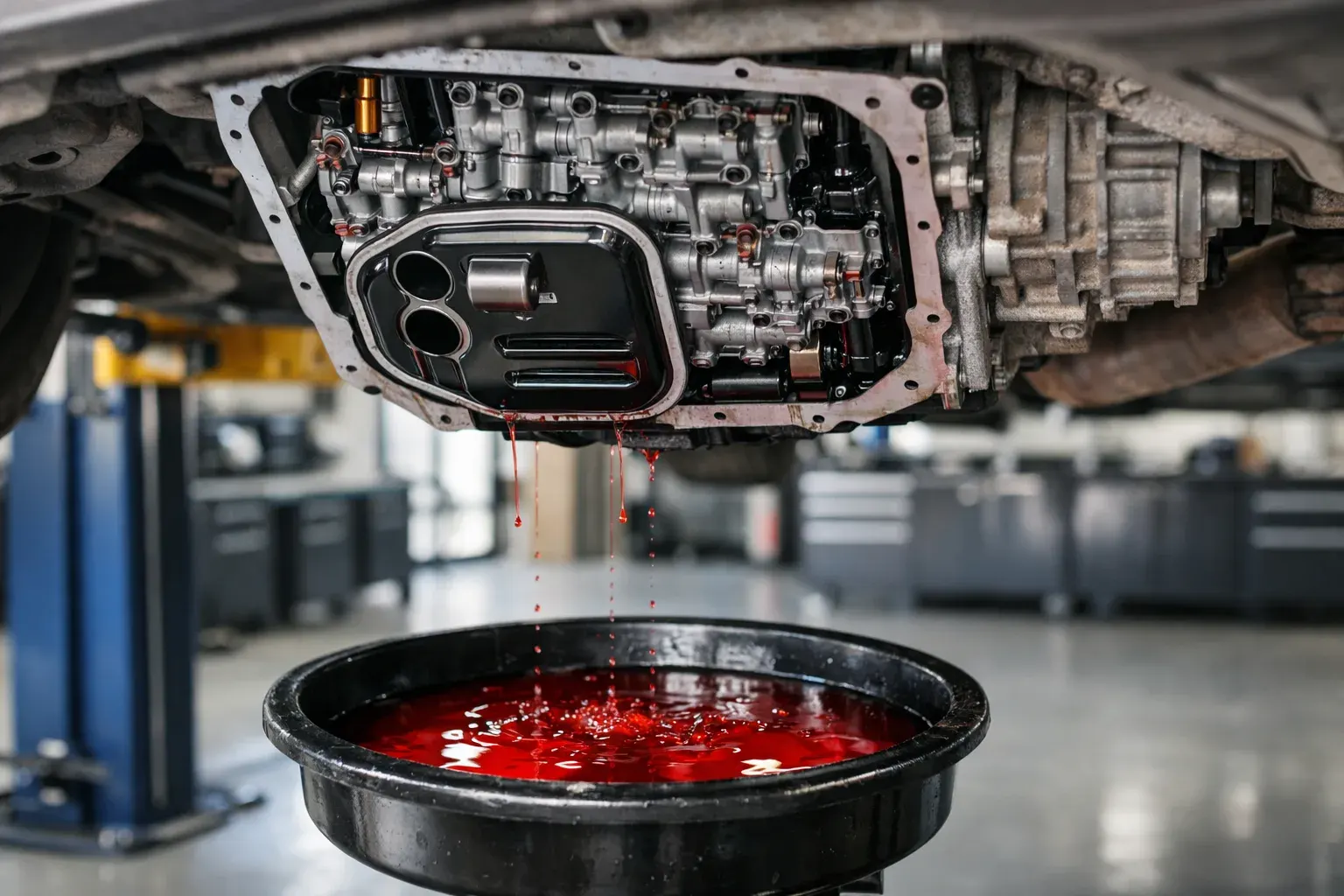
- Red or brown fluid under the car
The most common causes
1. Old or low fluid
Gearbox fluid lubricates, cools and carries the hydraulic pressure that makes shifts happen. Many gearboxes are called "lifetime fill", but heat ages the fluid faster in the UAE. Old or low fluid is one of the most common causes of harsh or delayed shifts.
2. Adaptations
Modern automatics learn how to shift as parts wear. After a battery disconnection, a repair or simply age, the learned values can be wrong, causing harsh shifts. A diagnostic reset and relearn often helps.
3. Solenoids, valve body and sensors
Electronic solenoids and speed sensors control each shift. A failing one can cause limp mode, harsh shifts or no Reverse. On some Mercedes 7G-Tronic gearboxes, for example, the conductor plate with its sensors is a known weak point that can be repaired.
4. Mechatronic unit (dual-clutch gearboxes)
On DSG, S tronic and PDK gearboxes the mechatronic unit combines hydraulics and electronics. Faults cause judder, delayed engagement or a flashing gear display, and many are repairable.
5. Clutches and torque converter
Worn clutch packs cause slipping; a worn torque converter can cause shudder at steady speed. These are bigger jobs, but still diagnosed first.
6. Leaks and wiring
Oil leaking through the gearbox's electrical connector (a known issue on some ZF gearboxes) can damage wiring and cause random faults.
7. It isn't always the gearbox
Engine misfires and worn engine or gearbox mounts can feel like gearbox jerks. A proper diagnosis rules these out.
What you can check
- Note when it happens: cold or hot, which gear, at what speed.
- Look for warning lights and fluid spots under the car.
- Don't keep driving hard in limp mode; drive gently to a workshop.
CVT gearboxes
Many Nissan, Toyota and other Japanese models use a CVT. Whining, shudder or loss of power on a CVT is often linked to fluid condition and heat; regular fluid changes are the best protection in Dubai traffic.
Why early diagnosis saves money
A harsh shift caused by old fluid can become clutch damage if ignored; metal particles from one worn part then circulate through the rest. Diagnosing early usually means a smaller repair.
At Partinn Auto Service we read gearbox fault codes and adaptation data, check fluid and leaks, and explain whether a fluid service, software reset, part repair or overhaul is needed, with an estimate before any work. More about gearbox repair · Mercedes · BMW · Audi.
Need a hand?
Describe the symptom on WhatsApp 052 296 5483 or call 058 821 2219. We are in Dubai Investment Park 2, open Monday to Saturday, 9 AM to 10 PM.