The colour of your exhaust smoke is a useful early warning. Some smoke is harmless, some means the engine is burning oil or coolant, and some means it is running with too much fuel. Here is how to read it.
Thin white vapour that disappears
Usually normal. On a cold start, or on a humid Dubai morning, water condenses in the exhaust and comes out as thin white vapour that clears within a few minutes as the system warms up.
Thick white smoke that doesn't clear
Take it seriously. Thick, continuous white smoke, often with a sweet smell, can mean coolant is getting into the cylinders: a failed head gasket, a cracked cylinder head, or on some engines a leaking EGR cooler. Check the coolant level (engine cold). If it is dropping and you see this smoke, stop driving and have it checked, because an engine that keeps overheating can be badly damaged.
Blue or blue-grey smoke
The engine is burning oil. Common causes:
- Worn valve stem seals: often a puff of blue smoke after idling or on start-up
- Worn piston rings: smoke under acceleration and steady oil consumption
- A failed crankcase ventilation (PCV/oil separator) valve, common on some turbo petrol engines
- A leaking turbocharger seal on turbo engines
- Overfilled engine oil
Check the oil level regularly; running low on oil causes far more expensive damage than the smoke itself.
Black smoke
Too much fuel, not enough air. On petrol cars, common causes are a clogged air filter (common with Dubai dust), leaking or dirty fuel injectors, a faulty sensor such as the mass airflow or oxygen sensor, or a fuel pressure problem. On diesels, some black smoke under hard acceleration can be normal on older engines, but heavy smoke usually means injector, turbo or air-supply problems, or a blocked particulate filter. Black smoke usually comes with higher fuel consumption.
Grey smoke
Can be oil (like blue smoke) or, on automatics, gearbox fluid being drawn in through a faulty modulator on some older designs. It needs a diagnosis.
Why it matters for the RTA test
Visible smoke and emissions-related warning lights can be a reason to fail the vehicle inspection. See our RTA test checklist.
What to do
- Note the colour, when it happens (cold start, idling, accelerating) and any smell.
- Check the oil and coolant levels with the engine cold.
- Look for warning lights.
- Book a diagnosis; thick white smoke with coolant loss means stop driving.
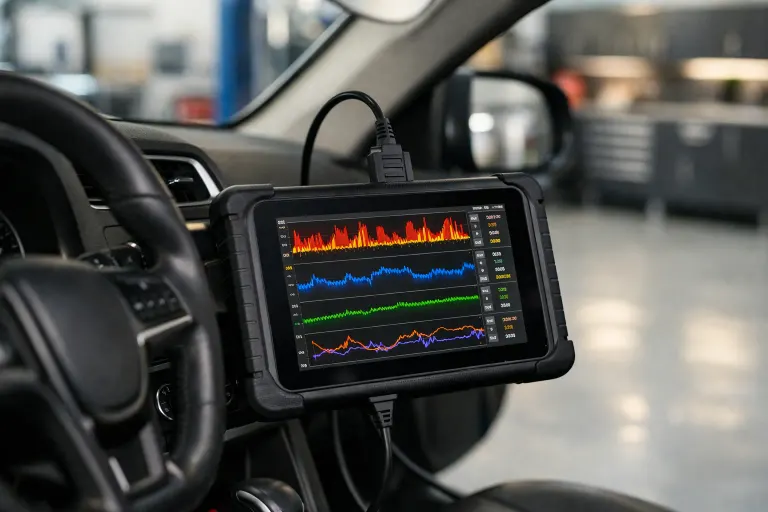
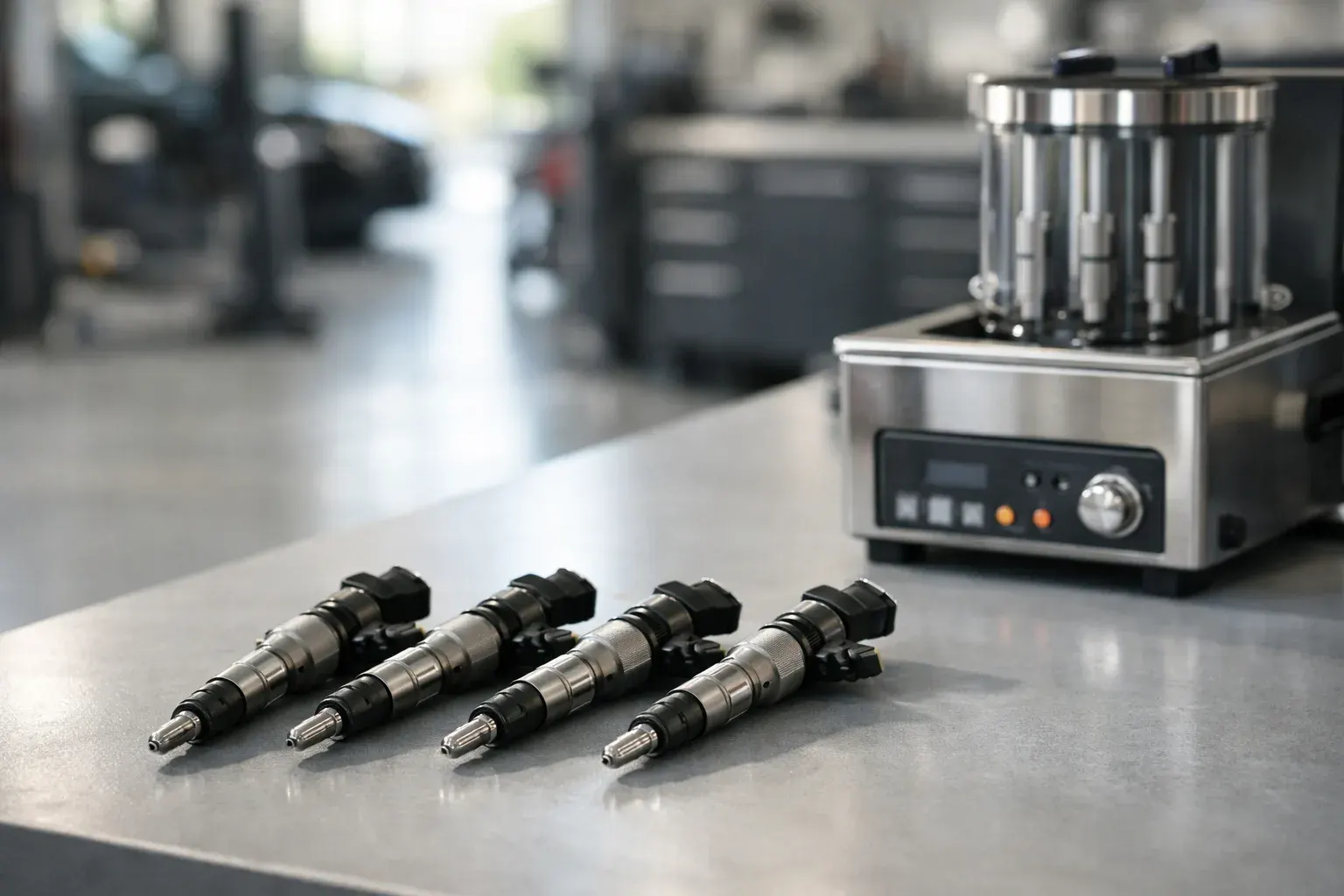
At Partinn Auto Service we read fault codes and live data, check compression or leak-down where needed, test injectors and the cooling system, and explain the cause before quoting. Engine repair · fuel injector repair · cooling system repair.
Need a hand?
Send a short video of the smoke on WhatsApp 052 296 5483 or call 058 821 2219. Open Monday to Saturday, 9 AM to 10 PM, in Dubai Investment Park 2.