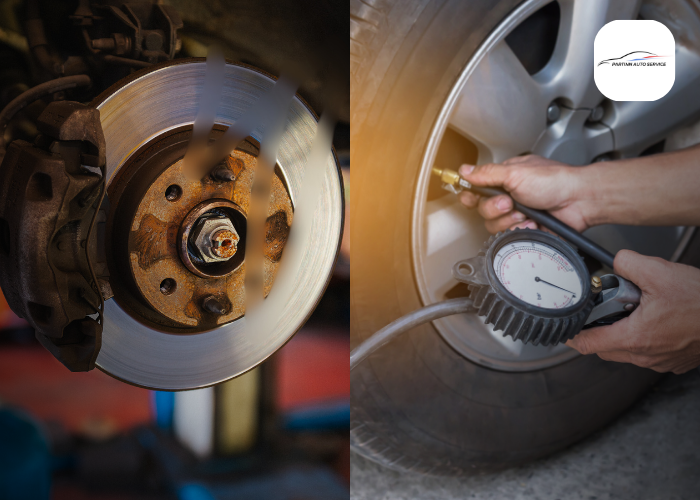
Introduction: Critical Safety Systems in Dubai's Extreme Conditions
Your vehicle's tires and brakes are the only points of contact between your vehicle and the road—making them the most critical safety systems in your car. In Dubai's extreme heat, with temperatures regularly exceeding 45°C (113°F), hot road surfaces, and high-speed driving conditions, proper tire pressure and brake maintenance becomes absolutely essential for your safety and the safety of others on the road.
At Partinn Auto Service, we've seen how neglecting tire pressure and brake maintenance leads to accidents, premature wear, and costly repairs. This comprehensive guide will help you understand proper tire pressure management, brake system maintenance, recognize warning signs, and implement effective maintenance practices—all tailored to Dubai's challenging driving conditions.
Why Tire Pressure Matters in Dubai's Heat
Understanding how heat affects tire pressure is crucial for safety and tire longevity:
1. Heat Expansion
Air expands when heated. In Dubai's extreme heat, tire pressure can increase by 4-6 PSI (pounds per square inch) during driving. Overinflated tires reduce traction, wear unevenly, and are more prone to blowouts.
2. Hot Road Surfaces
Road surfaces in Dubai can reach 60-70°C during summer, significantly heating your tires. This increases tire pressure and accelerates tire wear, especially on highways.
3. Increased Rolling Resistance
Underinflated tires create more rolling resistance, increasing fuel consumption by up to 3% and generating excessive heat that can cause tire failure.
4. Reduced Traction
Incorrect tire pressure reduces traction, especially critical during sudden braking or emergency maneuvers. This is particularly dangerous on Dubai's high-speed highways.
5. Uneven Wear Patterns
Improper tire pressure causes uneven wear, reducing tire lifespan and requiring premature replacement. In Dubai's heat, this happens faster than in moderate climates.
6. Blowout Risk
Underinflated tires generate excessive heat, especially at high speeds common on UAE highways. This heat buildup can cause tire blowouts—a serious safety hazard.
7. Fuel Efficiency Impact
Properly inflated tires improve fuel efficiency by 3-5%, saving money on fuel costs—especially important given Dubai's fuel prices.
Proper Tire Pressure Guidelines for Dubai
Maintaining correct tire pressure is essential for safety and performance:
1. Check Manufacturer Recommendations
Your vehicle's recommended tire pressure is found in the owner's manual, on a sticker inside the driver's door, or in the fuel filler door. This pressure is specified for cold tires (not driven for at least 3 hours).
2. Check Pressure When Tires Are Cold
Always check tire pressure when tires are cold (before driving or after the vehicle has been parked for at least 3 hours). Heat from driving increases pressure, giving inaccurate readings.
3. Recommended Checking Frequency
In Dubai's heat, check tire pressure:
- Weekly: During summer months (May-September)
- Bi-weekly: During cooler months (October-April)
- Before long trips: Always check before highway travel
- After temperature changes: Significant weather changes affect pressure
4. Understanding Pressure Readings
Tire pressure is measured in PSI (pounds per square inch) or BAR. Most vehicles in UAE use PSI. Typical passenger car tire pressure ranges from 30-35 PSI, but always check your vehicle's specific requirements.
5. Don't Overinflate
While it might seem logical to slightly overinflate to compensate for heat expansion, this is dangerous. Overinflated tires reduce traction, wear unevenly in the center, and are more prone to damage from road hazards.
6. Account for Load
If carrying heavy loads or multiple passengers, you may need to increase tire pressure slightly. Check your owner's manual for load-specific pressure recommendations.
7. Use Quality Pressure Gauge
Invest in a quality digital tire pressure gauge. Gas station gauges can be inaccurate. A good gauge costs AED 50-150 and is essential for accurate readings.
8. Check All Tires
Check all four tires plus your spare tire. Spare tires lose pressure over time and may be needed in emergencies.
At Partinn Auto Service, we offer free tire pressure checks and can help you understand the correct pressure for your specific vehicle and driving conditions.
Warning Signs of Tire Problems
Recognizing tire problems early prevents accidents and costly damage:
1. Uneven Wear Patterns
Uneven wear indicates alignment problems, incorrect pressure, or suspension issues. Common patterns include:
- Center wear: Overinflation
- Edge wear: Underinflation
- One-side wear: Alignment problems
- Cupping or scalloping: Suspension or balance issues
2. Low Tread Depth
Tire tread provides traction, especially important in wet conditions. Check tread depth regularly. Minimum legal tread depth in UAE is 1.6mm, but we recommend replacing at 3mm for safety.
3. Visible Damage
Cracks, bulges, cuts, or embedded objects in tires require immediate attention. These can cause sudden tire failure, especially at high speeds.
4. Vibration or Shaking
Vibration while driving, especially at certain speeds, indicates tire balance problems or uneven wear. This affects handling and safety.
5. Pulling to One Side
If your vehicle pulls to one side while driving, it may indicate tire pressure imbalance, alignment problems, or uneven tire wear.
6. Excessive Road Noise
Unusual road noise can indicate tire problems, especially if it's louder than normal or changes with speed.
7. Slow Leaks
If you need to add air frequently, you have a slow leak. This can be caused by punctures, valve stem problems, or rim damage.
8. Age of Tires
Even with good tread, tires older than 6 years should be replaced. Rubber degrades over time, especially in Dubai's heat and intense UV exposure.
Understanding Your Brake System
Your brake system is a complex network of components working together to stop your vehicle safely:
Key Brake Components:
- Brake Pads: Friction material that presses against rotors to create stopping force
- Brake Rotors (Discs): Metal discs that brake pads clamp onto
- Brake Calipers: Hydraulic components that squeeze pads against rotors
- Brake Fluid: Hydraulic fluid that transfers force from brake pedal to calipers
- Brake Lines: Hoses and pipes that carry brake fluid
- Master Cylinder: Generates hydraulic pressure when you press the brake pedal
- ABS (Anti-lock Braking System): Prevents wheel lock-up during hard braking
- Brake Sensors: Monitor brake pad wear and system function
In Dubai's heat and high-speed driving conditions, brake systems work harder and require more frequent maintenance than in moderate climates.
Why Brake Maintenance is Critical in Dubai
Several factors make brake maintenance especially important in UAE conditions:
1. High-Speed Driving
Dubai's highways allow high-speed driving, requiring more braking force and generating more heat. This accelerates brake pad and rotor wear.
2. Frequent Stop-and-Go Traffic
City driving in Dubai involves frequent braking, especially during rush hours. This constant use accelerates brake component wear.
3. Heat Buildup
High ambient temperatures combined with braking heat can cause brake fade—reduced stopping power when brakes overheat. This is dangerous, especially during emergency stops.
4. Dust and Sand Contamination
Dubai's sandy environment means more dust and debris enter brake systems, accelerating wear and potentially causing damage to brake components.
5. Aggressive Driving
High-speed driving and sudden stops common in Dubai accelerate brake wear significantly compared to moderate driving conditions.
6. Heavy Vehicle Loads
SUVs and vehicles carrying heavy loads require more braking force, accelerating wear on brake pads and rotors.
7. Brake Fluid Degradation
Heat causes brake fluid to degrade faster, reducing its effectiveness and potentially causing brake failure. Brake fluid absorbs moisture over time, lowering its boiling point.
Warning Signs Your Brakes Need Attention
Never ignore these brake warning signs—they indicate your safety is at risk:
1. Squealing or Grinding Noises
Squealing usually indicates brake pads are worn and need replacement. Grinding sounds mean pads are completely worn and metal is contacting rotors—immediate replacement required.
2. Soft or Spongy Brake Pedal
A brake pedal that feels soft, spongy, or goes to the floor indicates air in brake lines or brake fluid problems. This is dangerous and requires immediate attention.
3. Brake Pedal Vibration
Vibration or pulsation in the brake pedal, especially during braking, usually indicates warped brake rotors. This reduces braking effectiveness and requires rotor resurfacing or replacement.
4. Pulling to One Side
If your vehicle pulls to one side when braking, it may indicate uneven brake pad wear, stuck caliper, or brake fluid leak on one side.
5. Brake Warning Light
Most modern vehicles have brake warning lights. If this illuminates, have your brake system checked immediately. Never ignore brake warning lights.
6. Reduced Braking Power
If your brakes feel less responsive or require more pedal pressure to stop, your brake system needs inspection. This could indicate worn pads, brake fluid problems, or other issues.
7. Burning Smell
A burning smell, especially after hard braking, indicates overheated brakes. This can cause brake fade and requires immediate attention.
8. Brake Fluid Leaks
Puddles of brake fluid under your vehicle or low brake fluid levels indicate leaks. This is extremely dangerous and requires immediate repair.
9. Brake Pedal Goes to Floor
If your brake pedal sinks to the floor, you have a serious brake system failure. Stop driving immediately and call for professional assistance.
10. Visible Brake Pad Wear
If you can see through your wheel spokes and notice brake pads are very thin (less than 3mm), replacement is needed soon.
If you experience any of these warning signs, contact Partinn Auto Service immediately. Brake problems are safety-critical and should never be delayed.
Brake Maintenance Schedule for Dubai
Regular brake maintenance prevents problems and ensures your safety:
1. Brake Inspection
Have your brakes inspected every 10,000-15,000 kilometers or every 6 months, whichever comes first. In Dubai's conditions, more frequent inspection is recommended.
2. Brake Pad Replacement
Brake pads typically last 30,000-70,000 kilometers, depending on driving habits and conditions. In Dubai's high-speed, high-heat conditions, expect the lower end of this range. Front pads wear faster than rear pads.
3. Brake Rotor Inspection
Rotors should be inspected with every brake pad replacement. They may need resurfacing or replacement if warped, scored, or below minimum thickness.
4. Brake Fluid Replacement
Brake fluid should be replaced every 2 years or 40,000 kilometers. In Dubai's heat, more frequent replacement (every 18 months) is recommended. Brake fluid absorbs moisture, which lowers its boiling point and reduces effectiveness.
5. Brake System Flush
A complete brake system flush removes old fluid and air, ensuring optimal brake performance. This should be done with every brake fluid replacement.
6. Caliper Inspection
Brake calipers should be inspected for leaks, proper function, and even pad wear. Stuck calipers cause uneven wear and reduced braking.
7. Brake Line Inspection
Brake lines and hoses should be inspected for cracks, leaks, or damage. Damaged brake lines can cause complete brake failure.
8. ABS System Check
Your ABS (Anti-lock Braking System) should be tested regularly. ABS warning lights indicate system problems requiring immediate attention.
Tire Maintenance Best Practices for Dubai
Proper tire maintenance extends tire life and ensures safety:
1. Regular Tire Rotation
Rotate tires every 10,000 kilometers to ensure even wear. Front tires wear faster than rear tires, and rotation extends overall tire life.
2. Wheel Alignment
Have wheel alignment checked every 20,000 kilometers or if you notice pulling, uneven wear, or after hitting potholes or curbs. Proper alignment extends tire life and improves handling.
3. Wheel Balancing
Balance wheels whenever you install new tires or if you notice vibration. Unbalanced wheels cause uneven wear and vibration, especially at high speeds.
4. Tread Depth Monitoring
Check tread depth regularly using a tread depth gauge or the penny test. Replace tires when tread depth reaches 3mm for safety, even though legal minimum is 1.6mm.
5. Visual Inspection
Regularly inspect tires for:
- Cracks in sidewalls
- Bulges or blisters
- Embedded objects (nails, screws, etc.)
- Uneven wear patterns
- Low pressure
6. Proper Tire Storage
If storing spare tires or seasonal tires, keep them in a cool, dry place away from direct sunlight. UV exposure degrades rubber.
7. Match Tire Types
All four tires should be the same brand, model, and size. Mixing different tire types can cause handling problems and uneven wear.
8. Replace in Pairs or Sets
When replacing tires, replace at least the pair (both front or both rear) to maintain balanced handling. For all-wheel-drive vehicles, replace all four tires together.
9. Use Correct Tire Type
Choose tires appropriate for Dubai's conditions. Summer tires are suitable year-round in UAE. All-season tires also work, but summer tires provide better performance in extreme heat.
10. Monitor Tire Pressure Monitoring System (TPMS)
Most modern vehicles have TPMS that alerts you to low tire pressure. Don't ignore these warnings—check and adjust pressure immediately.
Professional Tire and Brake Service at Partinn Auto Service
Our comprehensive tire and brake service includes:
Tire Services:
- Tire Pressure Check and Adjustment: Free pressure checks and adjustments
- Tire Inspection: Comprehensive visual and measurement inspection
- Tire Rotation: Professional rotation for even wear
- Wheel Alignment: Precise alignment using advanced equipment
- Wheel Balancing: Dynamic balancing for smooth driving
- Tire Replacement: Quality tires from leading manufacturers
- Tire Repair: Professional puncture repair when safe
- TPMS Service: Sensor replacement and system programming
Brake Services:
- Brake Inspection: Comprehensive brake system inspection
- Brake Pad Replacement: Quality pads for all vehicle types
- Brake Rotor Service: Resurfacing or replacement as needed
- Brake Fluid Replacement: Complete fluid flush and replacement
- Brake Caliper Service: Inspection, repair, or replacement
- Brake Line Service: Inspection and replacement if needed
- ABS Service: Diagnosis and repair of ABS systems
- Brake System Bleeding: Removing air from brake lines
- Emergency Brake Service: Parking brake adjustment and repair
We specialize in tire and brake service for luxury vehicles including Mercedes, BMW, Audi, Porsche, Lexus, and other premium brands. Our state-of-the-art facility in DIP 2, Dubai, is equipped with the latest diagnostic and service equipment.
We use only quality parts and tires from reputable manufacturers, ensuring your vehicle receives the best care for safe and reliable operation in Dubai's challenging conditions.
When to Replace Tires
Knowing when to replace tires is crucial for safety:
1. Tread Depth
Replace tires when tread depth reaches 3mm for safety (legal minimum is 1.6mm). Tread provides traction, especially important in wet conditions or emergency situations.
2. Age
Replace tires older than 6 years, regardless of tread depth. Rubber degrades over time, especially in Dubai's heat and intense UV exposure. Check tire manufacturing date (DOT code on sidewall).
3. Visible Damage
Replace immediately if you notice:
- Deep cuts or punctures in sidewall
- Bulges or blisters
- Cracks in sidewall
- Excessive uneven wear
- Exposed cords or belts
4. Performance Issues
Replace if you experience:
- Excessive vibration that balancing doesn't fix
- Poor traction, especially in wet conditions
- Frequent punctures or slow leaks
- Handling problems
5. After Accidents
Have tires inspected after accidents or impacts. Internal damage may not be visible but can cause sudden failure.
When to Replace Brake Components
Understanding when brake components need replacement ensures your safety:
1. Brake Pads
Replace when pad thickness reaches 3mm. Most pads have wear indicators that make squealing sounds when replacement is needed. In Dubai's conditions, expect replacement every 30,000-50,000 kilometers.
2. Brake Rotors
Rotors may need resurfacing or replacement when:
- Thickness is below manufacturer minimum
- Severely warped (causing vibration)
- Deeply scored or grooved
- Cracked or damaged
Rotors typically last through 2-3 sets of brake pads, but Dubai's conditions may require more frequent replacement.
3. Brake Fluid
Replace brake fluid every 18-24 months in Dubai's heat. Old fluid absorbs moisture, lowering its boiling point and reducing brake effectiveness, especially during hard braking.
4. Brake Calipers
Replace calipers if they're leaking, stuck, or damaged. Stuck calipers cause uneven pad wear and reduced braking on one side.
5. Brake Lines
Replace brake lines immediately if cracked, leaking, or damaged. Damaged brake lines can cause complete brake failure.
Cost Considerations for Tire and Brake Service in Dubai
Service costs vary based on vehicle type and work required:
Tire Services:
- Tire Pressure Check: Free at Partinn Auto Service
- Tire Rotation: AED 100-200
- Wheel Alignment: AED 200-400
- Wheel Balancing: AED 100-200
- Tire Replacement (per tire): AED 300-2,000 (depending on tire type and vehicle)
- TPMS Sensor Replacement: AED 200-500 per sensor
Brake Services:
- Brake Inspection: Free at Partinn Auto Service
- Brake Pad Replacement (Front): AED 400-1,500 (depending on vehicle)
- Brake Pad Replacement (Rear): AED 350-1,200
- Brake Rotor Resurfacing: AED 200-400 per rotor
- Brake Rotor Replacement: AED 300-1,500 per rotor
- Brake Fluid Replacement: AED 300-600
- Complete Brake Service (Pads + Rotors): AED 1,200-3,500 (depending on vehicle)
- Brake Caliper Replacement: AED 800-2,500 per caliper
Luxury Vehicle Note: Mercedes, BMW, Audi, and Porsche vehicles often have more complex brake systems with additional features (ceramic brakes, electronic parking brakes, etc.), which may increase service costs. However, proper maintenance prevents much more expensive repairs and ensures your safety.
At Partinn Auto Service, we offer competitive pricing and use only quality parts. Regular maintenance is always more cost-effective than emergency repairs and ensures your safety on Dubai's roads.
Special Considerations for Luxury Vehicles
Luxury vehicles have unique tire and brake requirements:
Mercedes-Benz
Mercedes vehicles often feature advanced brake systems with electronic parking brakes, brake assist systems, and sophisticated tire pressure monitoring. Proper service requires specialized knowledge and equipment.
BMW
BMW vehicles typically have performance-oriented brake systems and may feature run-flat tires. Brake pad replacement requires proper reset procedures for brake wear sensors.
Audi
Audi vehicles, especially performance models, have high-performance brake systems. Proper brake fluid (often specific types) and correct service procedures are critical.
Porsche
High-performance Porsche vehicles may feature ceramic brake systems, which require specialized service. Tire selection is critical for performance and safety.
At Partinn Auto Service, our certified technicians have extensive experience with luxury vehicle tire and brake systems. We have the specialized equipment and knowledge to properly service all luxury vehicle brands.
Emergency Situations: What to Do
If you experience tire or brake problems while driving:
Tire Blowout:
- Stay calm and don't panic
- Don't brake suddenly—gradually release accelerator
- Hold steering wheel firmly and steer straight
- Allow vehicle to slow naturally, then brake gently
- Pull over to a safe location
- Call Partinn Auto Service at +971 52 296 5483 for assistance
- We offer free recovery services throughout Dubai
Brake Failure:
- Stay calm—most brake failures are partial, not complete
- Pump brake pedal rapidly to build pressure
- Downshift to lower gear to slow vehicle
- Use parking brake gradually (not suddenly)
- Steer to safe location
- Call for professional assistance immediately
- Do not attempt to drive with brake problems
Important: If you experience brake failure, pull over immediately and call for professional assistance. Do not attempt to drive to a service center with brake problems.
Conclusion: Prioritize Safety with Proper Tire and Brake Maintenance
Your vehicle's tires and brakes are the most critical safety systems, and proper maintenance is not optional—it's essential for your safety and the safety of others on Dubai's roads. Regular maintenance, early problem detection, and professional service are key to safe driving in UAE's challenging conditions.
At Partinn Auto Service, we're committed to providing the highest quality tire and brake service for all vehicle types in Dubai. Our certified technicians have extensive experience with luxury vehicles and use only quality parts and tires from reputable manufacturers.
Don't wait until you experience a problem. Schedule your tire and brake inspection today and ensure your vehicle is safe for Dubai's roads. Contact us at +971 52 296 5483 or request a free quote online.
Remember: Proper tire pressure and brake maintenance not only ensures your safety but also extends component life, improves fuel efficiency, and provides peace of mind. In Dubai's extreme conditions, proactive maintenance is essential for safe and reliable driving.
If you experience tire or brake problems, remember we offer free vehicle recovery services throughout Dubai. Your safety is our top priority, and we're here to help whenever you need professional tire or brake service.